Close-icon

System Families

ALEX

High performance CCD cameras for high energy or laser plasma applications

ALEX for VUV EUV X-ray

Suitable for Photon Energy Range 5 eV - 20 keV

Based on a unique platform concept, greateyes offers a portfolio of scientific cameras with vacuum interface for imaging and spectroscopy in the VUV, EUV, soft, and hard X-ray range. Incoming photons are directly detected by the CCD sensor. Beside the precise measurement of high energy radiation, the detectors exhibit a high sensitivity in the ranges NIR, VIS and UV as well.

All greateyes cameras combine scientific CCD sensors with ultra-low noise electronics for optimal detection of weak signals. Select among different spectral sensitivities and flange types to find the best solution for your imaging or spectroscopic application. The full frame CCD sensors are cooled by multi-stage Peltier elements. The cameras provide a rich set of functionalities including fully flexible binning operation, various trigger and synchronization modes, crop and burst mode, software-selectable gain as well as temperature monitoring of the sensor and the Peltier hot side.

Features & Benefits

  • Ultra deep TE cooling down to -100°C
    Lowest dark current for better detection limit
  • High Quantum Efficiency up to 98%
    Very sensitive sensors for low light applications
  • User selectable gain
    Balance your detector for best SNR and dynamic range
  • GigE & USB 3.0 data interface
    Local or remote network operation – your choice!
  • Fast readout speeds up to 5 MHz
    Fast frame rates paired with low-noise electronics
  • Flexible software options
    Camera software and SDK’s available

Choose your ALEX camera series

Common Specifications

Pixel readout frequency

50 kHz, 100 kHz, 250kHz, 500 kHz, 1 MHz, 3 MHz (5 MHz for visualization mode)

AD convertor resolution

18 bit

Linearity

Better than 99%​

Temperature Monitoring

Two thermistors at CCD sensor and thermoelectric cooler (hot side)

Data Link

Gigabit Ethernet, USB 3.0

Software

greateyes Vision software for Windows 10 / 11

SDK

DLL for Windows; LabVIEW, EPICS, Linux, Python, Tango driver (optional)

Drivers

EPICS, Tango, µManager

TTL interface signals

Exposure out, shutter out, 2 external trigger in

Operating conditions

Temperature: 0°C to 35°C ambient; Relative humidity: <80% (non-condensing)

Power Supply

80-264 VAC, 47-63 Hz, max. 1.1 A (230 V) / 1.9 A (115 V); 2k2k plus & 4k4k: 85-264 VAC, 47-63 Hz, max. 1.9 A (230 V) / 3.8 A (115 V)

Certification

CE

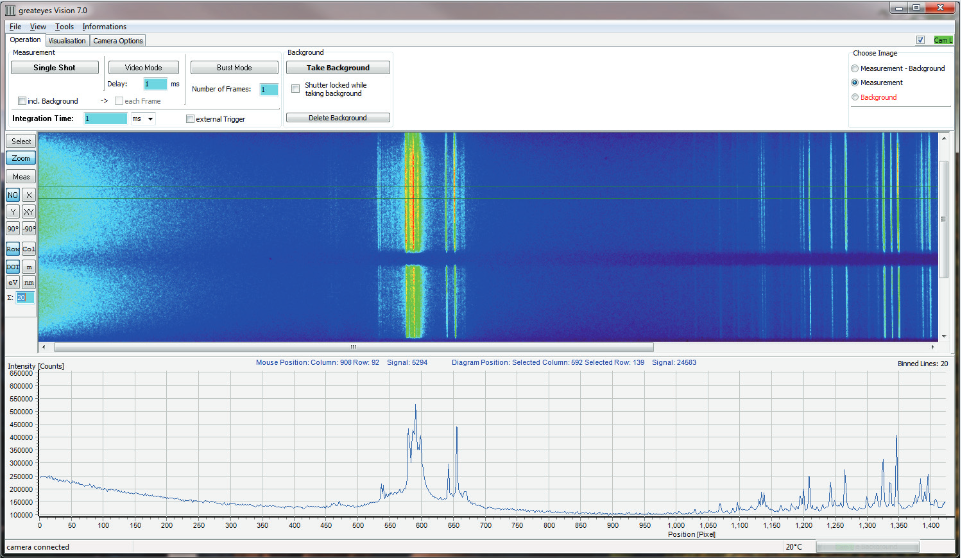
greateyes Vision software

Providing access to all camera functionalities

greateyes Vision software includes comprehensive visualisation, analysis and storage options, and supports important features such as wavelength and geometric calibration, crop and burst modes, and various file formats. The software runs on 32/64-bit Windows systems. For integration into other systems, a software development kit and drivers are available.

Software features

  • Supports crop and burst readout modes
    For higher frame rates and precise time resolution
  • Fully flexible horizontal and vertical binning
  • Wavelength and geometric calibration
  • Various file formats
    JPG, PNG, BMP, TXT, TIFF (18 bit), DAT raw data
  • Many drivers available
    For integration into other systems
  • Language support
    In English, Chinese and German
  • Comprehensive visualisation and image manipulation routines
  • Runs on 32/64-bit Windows systems

Frequently Asked Questions

With its compact camera design and configurable vacuum-flange interfaces, ALEX detectors are practical for both laboratory-based instruments and larger experimental environments like synchrotron, XFEL and HHG beamlines as well as EUV lithography setups. Standard data interfaces, triggering options and software/SDK support help simplify integration into existing measurement systems. Our ALEX cameras combine high quantum efficiency, ultra-low-noise electronics and ultra-deep cooling to facilitate demanding imaging and spectroscopic applications where weak signals in the VUV, EUV or X-ray range need to be reliably detected.

ALEX can be used for imaging and spectroscopy applications that rely on detection of photons across the range of 5 eV – 20 keV, depending on sensor type and configuration. High sensitivity measurements of VUV, EUV, soft and hard X-ray signals are particularly well supported, with sensitive measurements in the NIR, VIS and UV regimes also possible. Techniques that require capturing low-intensity signals where signal-to-noise is critical, as well as measurements where high dynamic range is important for resolving both weak and more intense features are where ALEX cameras excel. Direct CCD detection combined with selectable gain, flexible binning, triggering and synchronization modes makes ALEX cameras adaptable to a range of methods, including high-energy photon research, EUV lithography and X-ray-based imaging and spectroscopy.

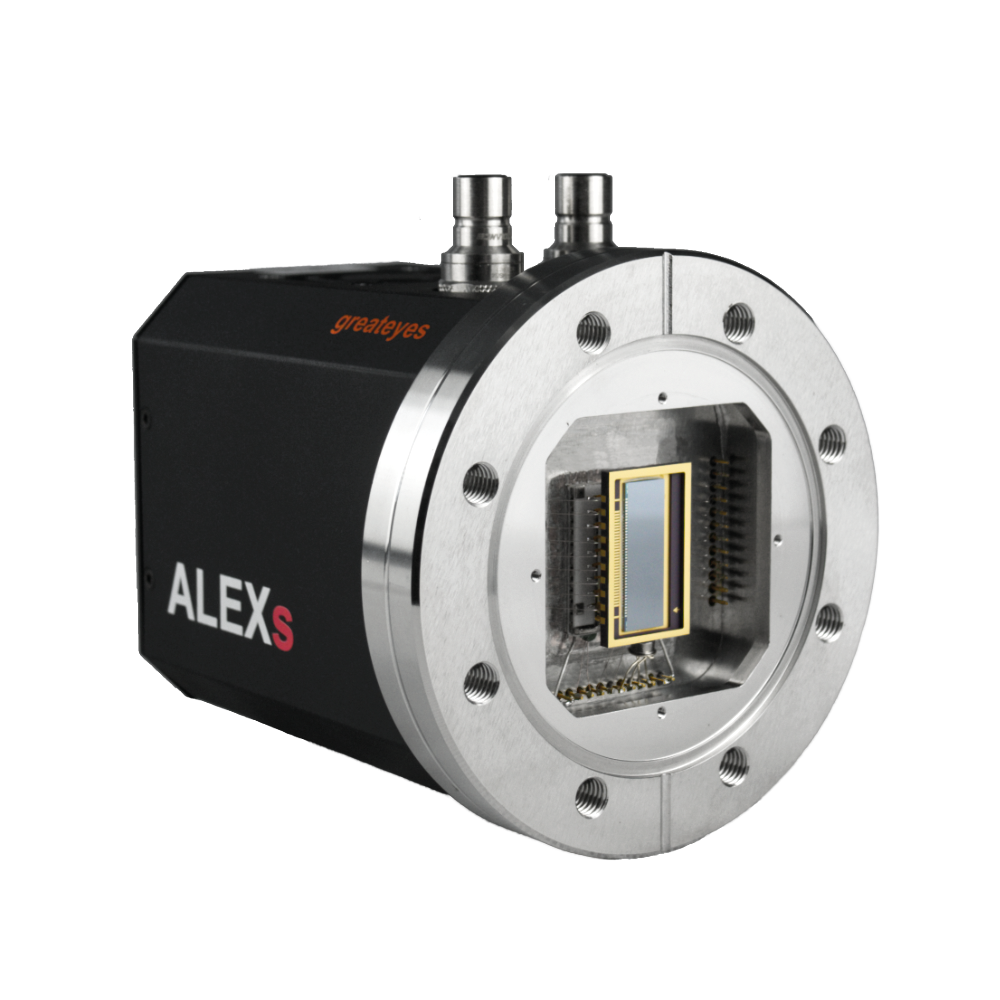
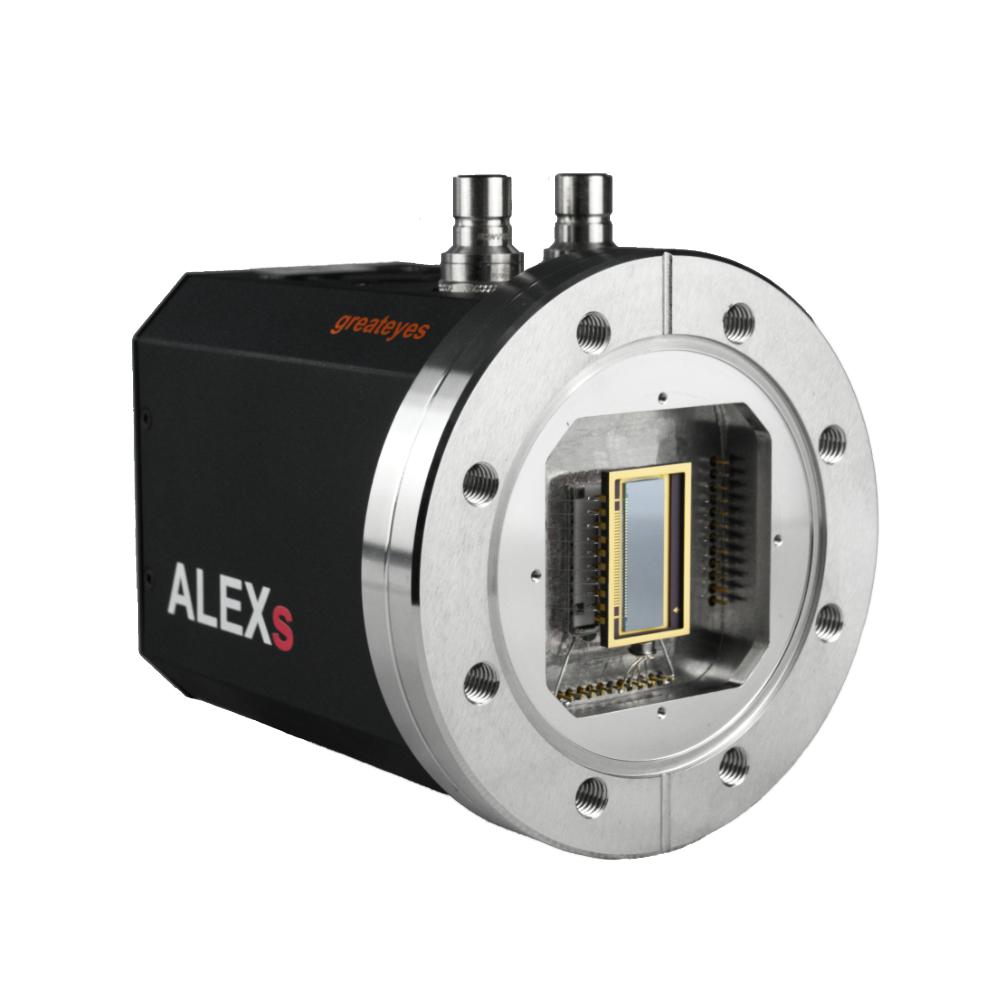
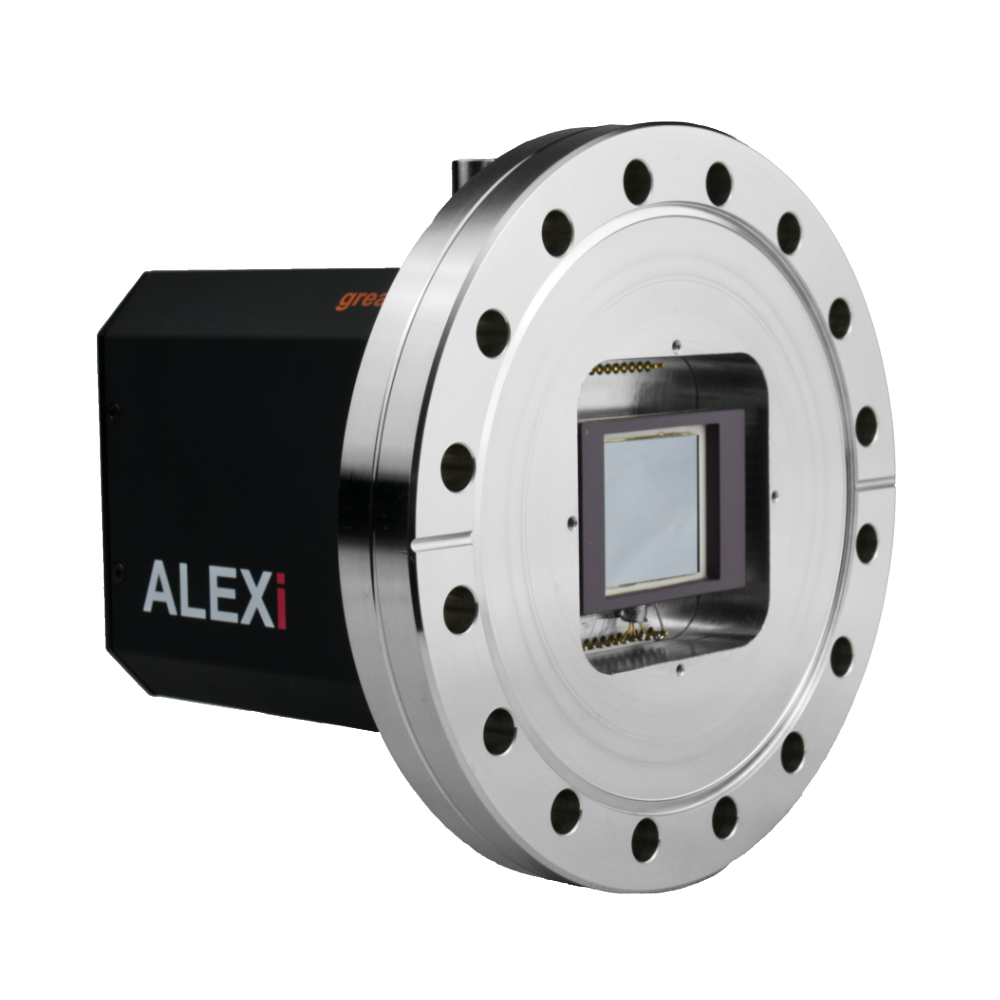
The ALEXi series is designed for imaging applications, while the ALEXs series is designed for spectroscopy. ALEXi is the right choice when you need to capture a two-dimensional image, for example in X-ray or EUV microscopy, tomography, ptychography or diffraction imaging. The ALEXi range can also be used for spectroscopy, where the large sensor area is ideal for dispersed signals where full vertical binning can be used. ALEXs is suited instead to spectroscopic setups where a signal is dispersed across the detector and needs to be recorded with high sensitivity and dynamic range.

We aim to provide a detector that is highly customizable according to our customers’ needs. On the hardware side we offer a range of sensor formats, spectral sensitivities and flange options, while software-selectable gain, flexible readout settings, binning, triggering and synchronization modes allow the detector behavior to be adapted to the measurement(s) at hand. For challenging or non-standard setups, we will help you to assess requirements such as vacuum interface, detector geometry, cooling capabilities and system integration approaches to identify the most suitable ALEX configuration for your needs.

Ease-of-integration is one of our primary focuses. ALEX cameras are designed to support both physical and software integration into existing setups. Compact camera design, vacuum-interface options and selectable flange configurations give our users flexible integration options covering many different experimental geometries. On the control side, data transfer is supported via Gigabit Ethernet and USB 3.0, while transistor-transistor logic (TTL) interface signal options are available to help users synchronize the camera with other components in an experimental/instrument-control setup. Camera operation can be handled through the greateyes software vision package or through a range of SDKs and drivers for commonly used environments.

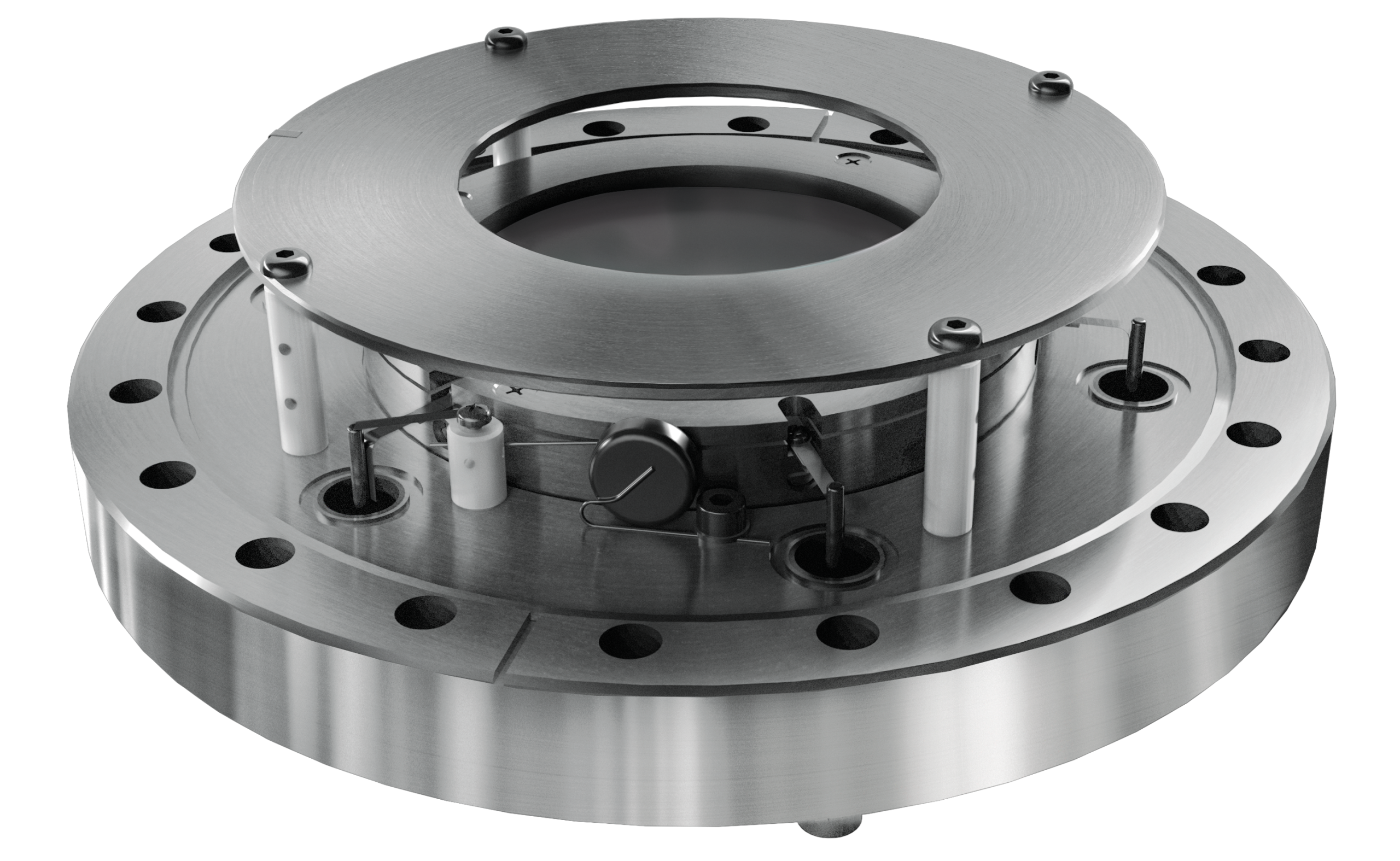
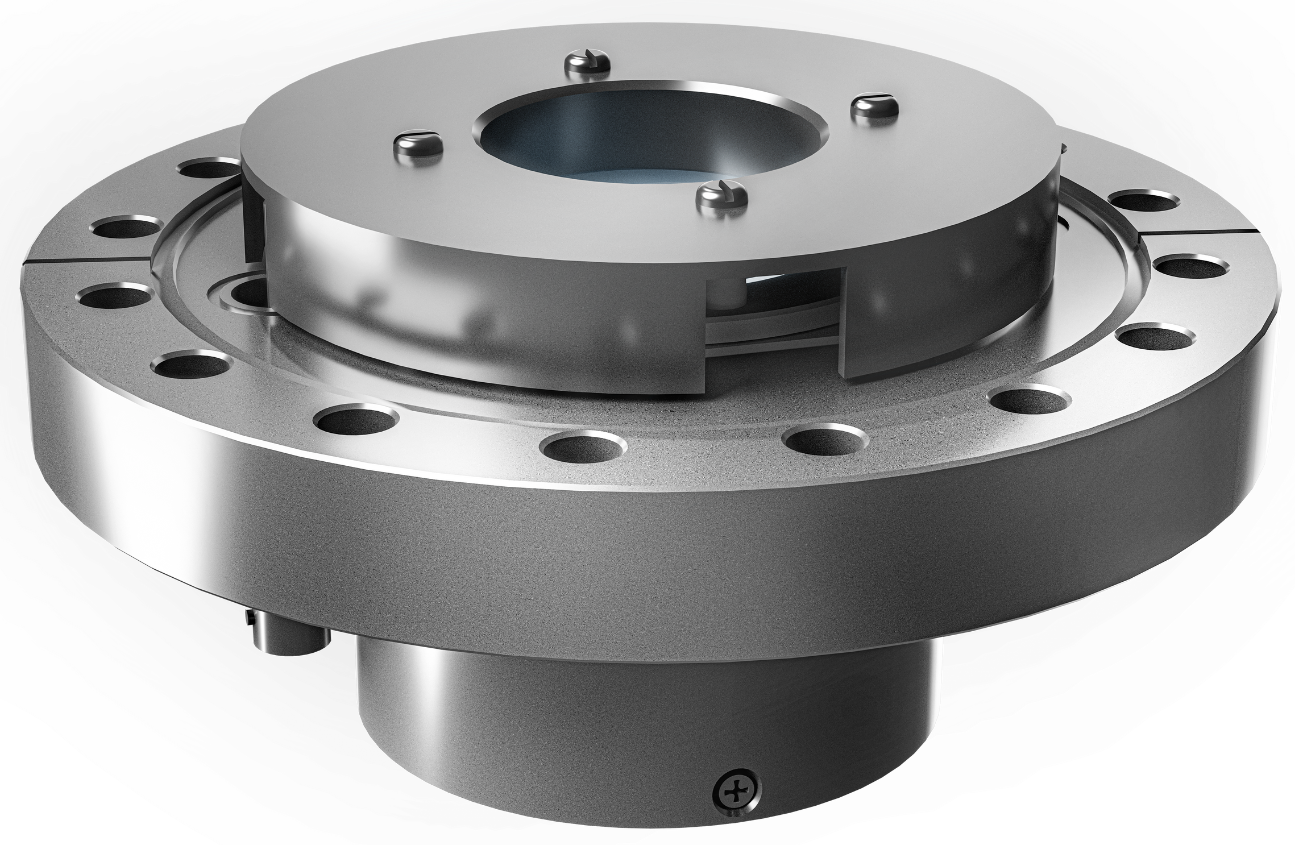
Yes! In practice, the camera can be mounted to a vacuum chamber or beamline port via a vacuum flange, which provides the mechanical connection and necessary seal between the detector assembly and the vacuum chamber. ALEX can be supplied with knife-edge sealed ConFlat (CF) flange configurations, where a precisely machined sealing ridge on the flange presses into a soft metal gasket to form a robust, leak-tight metal seal when the connection is tightened. This type of connection is well suited for high or ultra-high vacuum applications. ISO-F flanges are also available, supporting integration into vacuum systems that already follow an ISO-F vacuum standard. For a beamline or laboratory vacuum setup, this means that an ALEX camera needs to be selected with a suitable vacuum interface so that it can be mechanically mounted, sealed and positioned correctly relative to the experiment. We will be happy to discuss parameters like chamber port size, flange standard, available space and required vacuum level when assisting you with choosing an ALEX model.

ALEX cameras support selectable pixel readout speeds from 50 kHz up to 3 MHz, with a 5 MHz visualization mode available for fast live viewing. Image rates depend on the selected camera model, sensor format and readout settings, but in general ALEX combines fast CCD readout speeds with low-noise electronics, as low as 2.8 e⁻ for ALEXi and 3.5 e⁻ for ALEXs depending on sensor configuration and readout setting. We will be happy to assist you with balancing acquisition speed with sensitivity, field of view and dynamic range to achieve strong performance suited to your measurement conditions.

This will depend on sensor type, pixel readout frequency and operating temperature. Typical read-noise values are as low asm 2.8 e⁻ for ALEXi and 3.5 e⁻ for ALEXs. Our ultra-deep cooling technology, down to -100°C, helps minimize dark current, with typical values in the 10⁻5 to 10⁻³ e⁻/pixel/s range for most ALEX configurations under ultra-low temperature operation. Choosing the right ALEX system for your noise requirements is important, and we will be happy to help identify the best configuration for your measurement conditions.

For ALEXi imaging applications, four model families are available with five usable pixel-format variants. The 1k1k model comes in 1024 x 1024 pixels for FI sensors and 1056 x 1027 pixels for other sensor types. The 2k2k model has 2048 x 2052 usable pixels, while the 2k2k plus model provides 2048 x 2064 pixels. For the largest ALEXi format, the 4k4k model offers 4096 x 4112 usable pixels. ALEXs is targeted instead at spectroscopy applications and is designed around rectangular sensor formats: the compact 1k128 model provides 1024 x 127 usable pixels, the wider 1k256 model extends this to 1024 x 255 pixels, and the 2k512 model offers the largest ALEXs format with 2048 x 515 usable pixels.

For ALEXi imaging applications, the active image area increases with the selected model format. The 1k1k model offers 13.3 mm × 13.3 mm with 13 µm × 13 µm pixels, while the 2k2k model provides 27.6 mm × 27.6 mm with 13.5 µm × 13.5 µm pixels. The larger 2k2k plus and 4k4k formats both use 15 µm × 15 µm pixels, giving active image areas of 30.7 mm × 30.7 mm and 61.4 mm × 61.4 mm respectively. This corresponds to approximate active-area diagonals of 18.8 mm, 39.0 mm, 43.4 mm and 86.8 mm for the 1k1k, 2k2k, 2k2k plus and 4k4k formats.

For ALEXs spectroscopy applications, the active areas are rectangular to suit dispersed signals: the 1k128 model provides 26.6 mm × 3.3 mm with 26 µm × 26 µm pixels, the 1k256 model extends this to 26.6 mm × 6.7 mm with the same pixel size, while our 2k512 model offers higher resolution with a sensor size of 27.6 mm × 6.9 mm with 13.5 µm × 13.5 µm pixels. The corresponding active-area diagonals are approximately 26.8 mm, 27.4 mm and 28.4 mm for the 1k128, 1k256 and 2k512 formats respectively.

ALEX cameras can be configured with different CCD sensor types and treatment options to match your spectral range and sensitivity requirements. Available options include front-illuminated (FI) and back-illuminated (BI) CCD sensors, as well as UV1 and deep-depletion (DD) variants for applications where enhanced response in specific spectral regions is required. In general, FI sensors provide a more economical option, while BI sensors are recommended when higher quantum efficiency is important. UV1 treatment is used to improve detector sensitivity to ultraviolet light, while DD variants are intended for applications requiring improved response at higher X-ray energies. ALEXi options range from FI, BI, and BI UV1 configurations depending on format, while ALEXs options include FI, FI DD, BI and BI UV1. We recommend selecting the sensor configuration based on photon energy range, expected signal level and required detection performance for your application.

Depending on the target photon energy range, sensor type and treatment options can be selected to reach the right sensitivity for your applications. We recommend BI-based configurations where high quantum efficiency is important, with up to 98% QE available, while UV1 and DD variants can be selected to optimise response in specific spectral regions. Our low-noise CCD electronics and ultra-deep cooling make ALEX well suited to weak-signal VUV, EUV and X-ray measurements where maximising signal collection and minimising noise are critical.

For stronger signals, saturation limits will be largely dependent on sensor format, its associated full-well capacity and gain setting. ALEX full-well capacities range from 100 ke⁻ up to 350 ke⁻ for ALEXi and from 100 ke⁻ up to 700 ke⁻ for ALEXs. We offer several models featuring high-capacity gain modes, which can be useful when measuring brighter features at the cost of some conversion sensitivity. True 18-bit AD conversion and > 99% linearity support measurements over a broad signal range.

Whether your measurements are photon-limited, work with brighter signals or require especially high dynamic range for resolving features across intensity ranges, we will be happy to assist you in configuring a camera that will meet your application requirements.


ALEX is a direct-detection charge-coupled device (CCD) camera. Incoming photons are absorbed in a pixelated silicon detector, generating charge that is collected, read out and converted into a digital signal. Because ALEX detects photons directly with the CCD sensor, it does not rely on an intermediate conversion step, such as the use of a scintillator. Instead, the key choice is selecting the right sensor type and treatment if required, such as FI, BI, UV1 or DD, for the photon-energy range and signal level of your desired application.

greateyes does not directly produce complementary optical systems for ALEX, such as beamline, spectrometer or microscope optics. However, we can support detector-side integration with compatible filter and sensor treatment options. We will be happy to assist you in determining the right configuration for your needs.

ALEX cameras use ultra-deep thermoelectric cooling to reduce dark current and improve the detection limit for weak-signal measurements. The achievable cooling temperature depends on the selected model: ALEXs models are typically specified down to -100 °C, while ALEXi models are specified down to -100 °C for the 1k1k format and down to -90 °C for the larger-format variants. Cooling can be supported by forced-air or liquid cooling depending on the model. Reliable, deep cooling is especially important for long exposure measurements, where dark current can otherwise become a significant contribution to the overall noise floor.

Does your application require time resolved imaging with nanosecond timing?

Explore related products from our sister companies...

MCP Imaging Detector

from Photek

Range of open-face MCP detectors for deep UV / VUV imaging that can be customised for your application.

MCP Imaging Camera

from Photek

Open-faced MCP detector coupled to a high-performance camera for imaging XUV/Soft X-rays in vacuum.

Request more information

    8 * 3 = ?
    Reload

    This CAPTCHA helps ensure that you are human. Please enter the requested characters.

    greateyes GmbH

    Ludwig-Boltzmann-Straße 3
    12489 Berlin
    Germany

    For Service & Support

    Contact Us

    Ludwig-Boltzmann-Straße 3
    12489 Berlin

    Phone:
    +49 (0)30 221 844 700
    Email:
    info@greateyes.de